What Is Life in Santa Catalina, Panama Like?
Veraguas

Santa Catalina is one of the world's most consistent surf destinations and one of Panama's most genuinely off-grid foreign-resident communities. A small Pacific coast town of about 1,000 people in Veraguas province, anchored to a fishing economy that predates the surf community by generations, with rough-and-real infrastructure that selects for a specific kind of foreign resident. People who choose Santa Catalina over the established expat destinations are choosing surf, ocean access, and authentic small-town Pacific Panama — and they are choosing this over conventional amenity infrastructure.
What Santa Catalina Actually Is
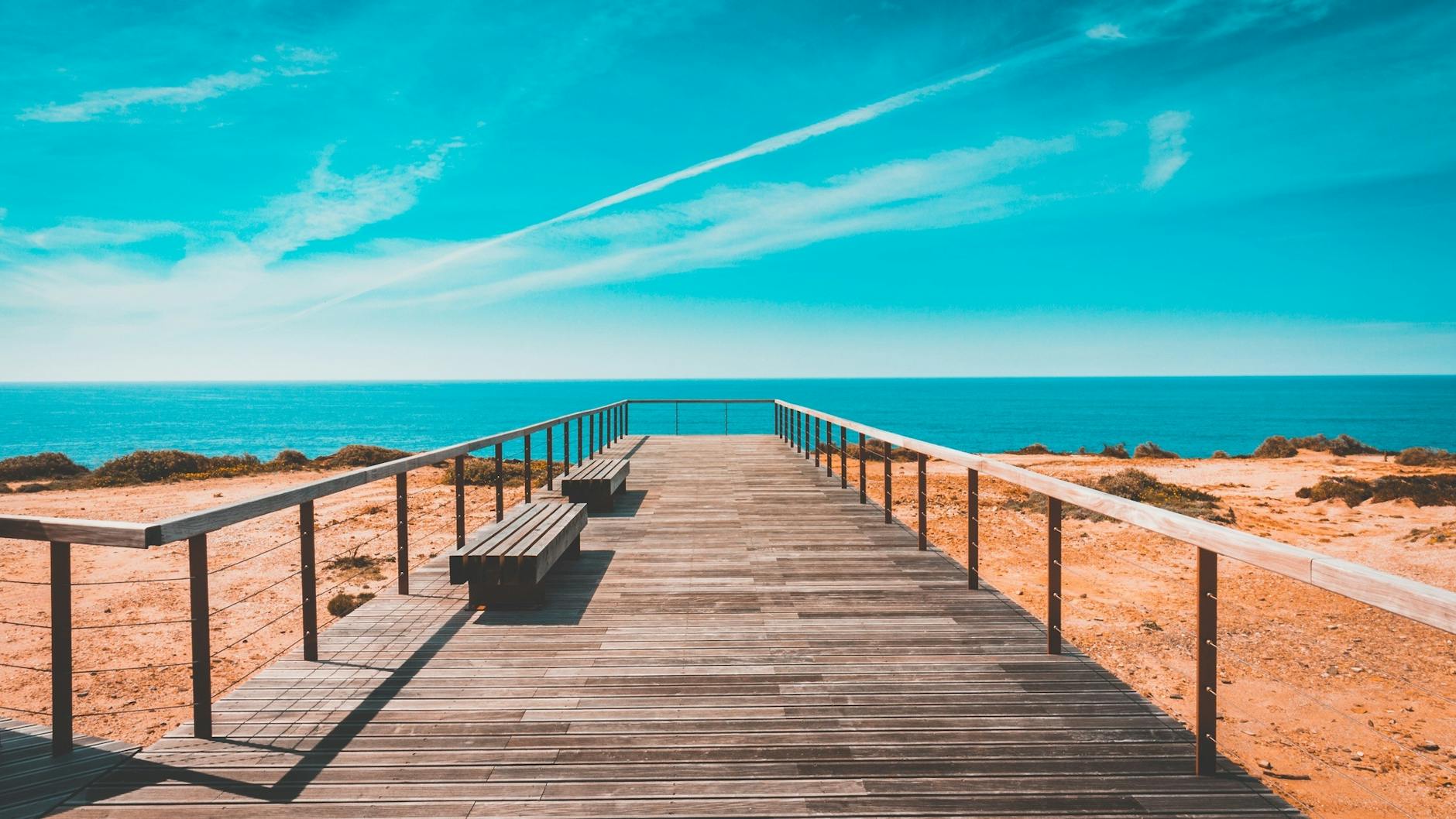
Santa Catalina is not what foreign-buyer marketing usually suggests. The Panama of expat imagination is Boquete (mountain), Coronado (developed beach), or Bocas del Toro (Caribbean islands). Santa Catalina is something different from all three: a small Pacific surf town that has grown alongside a working fishing community, with a foreign-resident population that has come specifically for surf access and the off-grid Pacific lifestyle.
What Santa Catalina actually is, is two communities sharing the same coast. The Panamanian fishing community has roots going back generations — small commercial fishermen, families who have lived in the area for decades, the traditional Pacific coast Panamanian rhythm of life. The foreign-resident community arrived later, drawn first by the surf in the 1990s, growing slowly through the 2000s and 2010s, and accelerating modestly post-2020.
The geography is precise. Santa Catalina sits on the Pacific coast of Veraguas province, about 4 hours by car from Panama City (via Pan-American Highway to Santiago, then south to the coast) and about 1.5 hours from Santiago, the provincial capital. The drive from Santiago south to Santa Catalina passes through cattle country and tropical lowlands; the final approach to the coast involves a winding road that ends at the small town clustered around the beach.
The town itself is small. The main commercial street is short. A handful of restaurants, a few small hotels, the dive and surf operations, and the modest commercial infrastructure serving residents and visitors. Outside the town center, residential properties spread along several roads — some toward the surf breaks, others on the hills overlooking the bay, others in the inland direction.
The population of Santa Catalina proper is approximately 1,000. The foreign-resident community is estimated at 200-400 across the broader area, with significant seasonal variation — many foreign residents are part-year, returning to colder North American climates during their summer months.
Geographically, Santa Catalina has rare natural assets. The point break at Santa Catalina is consistently rated as one of the best surf waves in the Americas — long, powerful, working most swells, drawing surfers from around the world. Coiba National Park, a UNESCO World Heritage marine reserve and one of the most biodiverse marine ecosystems in the eastern Pacific, lies offshore — accessible only via boat from Santa Catalina. The combination of surf, biodiversity, and off-grid Pacific lifestyle is the proposition.
What Santa Catalina is not: a developed expat enclave, a place with substantial commercial infrastructure, somewhere with reliable services, or a typical tourist beach destination. The town has limited electricity infrastructure, intermittent water service, limited fiber internet, no large supermarkets, no hospital, and limited cell coverage.
- Santa Catalina is a small Pacific surf town in Veraguas province
- Population ~1,000 in town; foreign-resident community ~200-400 across broader area
- 4 hours from Panama City; 1.5 hours from Santiago (Veraguas capital)
- World-class surf at the Santa Catalina point break — consistently rated among Americas' best
- Coiba National Park UNESCO World Heritage marine reserve accessible offshore
- Off-grid infrastructure — limited electricity, intermittent water, limited internet, no hospital
- Two communities: long-standing Panamanian fishing families + foreign surf-and-eco residents
- Significantly rougher and smaller than Pedasí or any other Panama beach destination
What Daily Life Looks Like
Daily life in Santa Catalina runs on the rhythms of surf, fishing, and the natural infrastructure of a small Pacific town with limited services.
Mornings start very early for surfers. The best surf conditions at the point break and surrounding spots are typically dawn — calmer winds, smaller crowds, the right swell timing. Surfers head to the breaks before 6 AM during certain seasons. This is not optional culture — it is part of why people live in Santa Catalina.
For non-surfing residents, mornings are still early. The fishing community heads out before dawn. The small town's commercial life begins by 7 AM — bakeries, small breakfast spots, a few cafes. By 8 AM the town is fully active.
Midday is hot. Pacific lowland heat. Year-round temperatures sit between 80°F and 92°F (27-33°C). The humidity is real. Most outdoor activity slows from late morning through mid-afternoon.
For grocery shopping, the options reflect the small-town reality dramatically. The town has small mini-markets handling daily basics — bread, eggs, basics, beer. There are no full-service supermarkets in Santa Catalina. For larger weekly shopping, most residents drive 1.5 hours to Santiago (Romero, Súper Carnes) or take occasional longer trips to Panama City.
The seafood is exceptional. Fresh fish, shrimp, octopus, and other ocean catch directly from local fishing boats is part of daily food culture. Some residents buy fish directly from fishermen at the dock. The seafood is one of the practical compensations for limited grocery infrastructure.
Banking is essentially absent. There is no bank in Santa Catalina. ATM service exists but is unreliable. Most residents do cash management in Santiago or Panama City.
Power is intermittent. Outages happen — weekly or more frequent during certain conditions. Most established foreign residents have backup systems (batteries, generators, sometimes solar) as standard infrastructure. Newer residences increasingly have full solar installations.
Internet has been a major story for Santa Catalina's evolution. Recent improvements through fiber (in some areas) and Starlink have transformed the practical viability for remote workers. Most current residents who do remote work use Starlink as primary or backup. Vehicle ownership is essential. 4WD vehicles are common because some beach-access and inland roads can be rough during wet season.
- Early mornings driven by surf conditions for surfers; fishing community also active pre-dawn
- Midday slows in heat; late afternoons bring evening surf and dinner activity
- Mini-markets for daily basics; Santiago 1.5 hours for full grocery shopping
- Seafood exceptional and direct from local fishing boats
- No bank, minimal pharmacy, no hospital — Santiago required for most non-basic services
- Power outages weekly+ during certain conditions; backup systems standard
- Starlink and improved fiber have transformed remote work viability
- Vehicle essential; 4WD common for outlying areas
Climate and Environment

Santa Catalina operates on a Pacific tropical coastal climate with strong seasonal variation. The natural environment is one of the primary draws of the area.
Year-round daytime temperatures sit between 80°F and 92°F (27-33°C). The variation is narrow. Humidity is high year-round, somewhat moderated by the consistent Pacific breeze. AC is essential for sleep and comfortable indoor function in most properties. Solar-powered AC has become common as solar installations have grown.
The two seasons are clear. Dry season runs December through April, bringing sustained trade winds, sunny days, and reduced rain. The Pacific breeze during dry season provides significant natural cooling. The wind can be intense — sustained for weeks, occasionally strong enough to affect surf conditions and outdoor activities.
Wet season runs May through November. Rain comes most afternoons in predictable patterns: clear mornings, building clouds, heavy showers between 2-5 PM, evening clearing. October and November typically have the heaviest rainfall. Roads to and from Santa Catalina can be affected by heavy rain.
Santa Catalina is well outside the Atlantic hurricane belt. Direct hurricane strikes do not occur. This is a significant geographic advantage.
The Pacific Ocean at Santa Catalina is warm year-round (76-84°F / 24-29°C). The point break is consistently rated among the best in the Americas — a long, powerful, predictable wave that works on most swells.
Coiba National Park, offshore from Santa Catalina, is one of the most significant marine biodiversity hotspots in the eastern Pacific. UNESCO World Heritage status protects coral reefs, mangrove forests, and extraordinary diversity of fish, sharks, sea turtles, dolphins, and whales.
Humpback whale watching from Santa Catalina is excellent during migration (typically July through October) — some of the best whale-watching access in the Americas. Wildlife is significant: abundant coastal and lowland tropical birds, howler monkeys audible from a distance, sea turtles nesting on some local beaches in season.
- Two strong seasons: dry (Dec-Apr) with sustained Pacific trade winds, wet (May-Nov) with afternoon rains
- Year-round temperatures 80-92°F (27-33°C); high humidity moderated by Pacific breeze
- Outside Atlantic hurricane belt — significant geographic advantage
- World-class surf: point break consistently rated among Americas' best
- Coiba National Park UNESCO marine reserve offshore — exceptional biodiversity
- Humpback whale watching excellent July-October
- Sea turtles nest on local beaches in season
- Mosquitoes and dengue present, particularly in wet season
Cost of Living Reality
Santa Catalina is the least expensive coastal Panama destination among those covered in this series, with cost structures that reflect the small market, the off-grid infrastructure, and the absence of foreign-resident enclave commercial development.
Housing varies dramatically by zone and type. A modest one-or-two-bedroom apartment in Santa Catalina runs $400-700 per month for long-term rental. Furnished units run $500-900. Single-family homes range from $600-1,500+ depending on size, location, and amenities. Properties with surf-access or elevated ocean views command premium relative to local pricing but are still meaningfully cheaper than Pedasí, Coronado, or coastal Bocas.
Buying property: $60,000 to $700,000+ covers the broad foreign-buyer market. Modest in-town homes start in the $60,000-100,000 range. Mid-range single-family homes run $100,000-300,000. Higher-end ocean-view or surf-adjacent properties run $300,000-700,000+.
Foreigners hold full fee-simple title in Panama — no trust structure required. Transaction costs run 5-7% including legal, registration, and 2% ITBI transfer tax. Independent legal review is essential. The Veraguas land market has some complexity, particularly with rural properties, beach-adjacent land with traditional family ownership, and properties that have changed hands multiple times.
Electricity costs vary based on backup systems. Solar-equipped households reduce ongoing electrical costs and outage exposure. Grid AC use can run $150-300 monthly when power is on.
Starlink is approximately $100-150 monthly. Most residents who do remote work pay for multiple connections.
Restaurants and dining: local Panamanian sodas serve full meals for $5-8. Mid-tier restaurants run $10-20 per person. The seafood is exceptional value — fresh ocean catch at prices that reflect direct-from-fishermen sourcing.
The honest monthly range: modest in-town lifestyle runs $1,200-2,000 monthly. Comfortable lifestyle with a real house, regular dining, vehicle, and full backup systems running runs $2,200-3,500+. The full ocean-view-property lifestyle with complete off-grid infrastructure runs $3,000-5,500+ monthly.
- Least expensive coastal Panama destination among those covered in this series
- Apartment rentals $400-900/month; homes $600-1,500+
- Buying range: $60K modest in-town to $700K+ ocean-view properties
- Foreign buyers hold full fee-simple title; transaction costs 5-7%
- Independent legal review essential — Veraguas land market complexity exists
- Solar investment reduces electrical costs and outage exposure
- Pensionado visa benefits go further proportionally due to lower base costs
- Realistic monthly floor: $1,200-2,000; comfortable: $2,200-3,500; full lifestyle: $3,000-5,500+
Healthcare Access

Santa Catalina has essentially no local healthcare beyond very basic services. Healthcare distance is the most significant practical limitation of living here, and accepting this geography is part of choosing Santa Catalina.
There is no hospital in Santa Catalina. A small public health center handles very basic services. A few medical clinics in town serve routine needs but with limited scope. Any moderate medical issue requires travel.
For routine care, Santiago (1.5 hours by car) is the nearest practical medical hub. The regional Caja hospital in Santiago and several private clinics handle most non-urgent care. This is the practical destination for general practitioner visits, specialists, and most non-emergency medical needs.
For hospital-level and complex care, the choice is between Santiago private hospitals (limited but available for many needs) and Panama City — 4 hours by car. Hospital Punta Pacífica (Johns Hopkins-affiliated) is the regional premier private hospital. The long drive to Panama City is the practical reality for any serious medical event.
Air ambulance services exist for very serious cases. Most established Santa Catalina residents accept that some medical situations require significant travel time.
Pharmacies in Santa Catalina handle very basic medications only. Santiago pharmacies handle most needs. Panama City for specialty medications.
The honest assessment for foreign residents: Santa Catalina works for healthy, active residents in active life phases who understand and accept the healthcare distance. It does not work for residents managing serious chronic conditions, requiring frequent specialist visits, or whose phase of life involves significant medical needs. Many Santa Catalina residents have made the explicit decision: surf, ocean access, and Pacific lifestyle outweigh medical proximity, and they have planned for the geography as part of the trade-off.
Some residents who have lived in Santa Catalina through different life phases have eventually relocated to David, Panama City, or back to their home countries as medical needs increased. This is a common pattern.
- No hospital in Santa Catalina; very basic local health center only
- Santiago (1.5 hours) is the nearest practical medical hub
- Panama City (4 hours) is the regional premier hospital destination
- Air ambulance services exist for serious cases
- Local pharmacies handle basics only; Santiago for most medications
- Pensionado visa benefits apply
- Healthcare distance is the most significant practical limitation
- Works for healthy active residents; less so for those with significant medical needs
Getting Around and Getting Out
Inside Santa Catalina, the town center is walkable. The compact commercial strip can be navigated on foot for basic errands. Many in-town residents use bicycles, scooters, or short walks for daily needs.
For most life beyond the immediate town center — surf breaks, beach access, residential properties outside the core, and the surrounding region — a vehicle is essential. 4WD vehicles are common and useful for residents in outlying areas, surf-access roads, and during wet season.
Road network: the road from Santiago to Santa Catalina is paved and in reasonable condition, though narrower than the Pan-American Highway. Within Santa Catalina, paved main roads connect the town center to the primary beaches and residential developments. Some inland and beach-access roads are gravel and can deteriorate during wet season.
For getting out of Santa Catalina, the practical artery is the road to Santiago and onto the Pan-American Highway. From Santiago, Panama City is 4 hours east. This is the standard route for major travel.
International travel routes through Tocumen International (PTY) in Panama City. The 4-hour drive to PTY plus airport time means total transit to international flights is 5-6 hours from Santa Catalina. This is meaningfully longer than from any other guide destination.
Regional bus service connects Santa Catalina to Santiago, with multiple daily departures. From Santiago, regular bus connections to Panama City, David, and other Panamanian destinations. The bus is functional, affordable, and used by both Panamanians and foreigners.
Within Santa Catalina, taxis exist but are limited. Uber is not active. For Pacific exploration and Coiba National Park access, boat operators run from Santa Catalina to Coiba (45-60 minutes by boat for many sites).
- Town walkable; vehicle essential for life beyond center
- 4WD common for outlying areas and wet-season conditions
- Santiago 1.5 hours; Panama City 4 hours by Pan-American Highway
- Tocumen International (PTY) 4+ hours — longest of any guide destination
- Regional bus service to Santiago and beyond; affordable and reliable
- Boat operators to Coiba National Park 45-60 minutes offshore
- Uber not active; taxis limited
- Transportation infrastructure functional but not abundant
Community and Social Life
Santa Catalina's community is small and tight, with the foreign-resident community integrated into rather than separated from the broader Panamanian community.
The Panamanian community is the foundation — multi-generational Veragüense families with roots in fishing, agriculture, and the broader Pacific coast economy. The Catholic parish, the schools, and the traditional cultural calendar anchor the deepest social structures. Spanish fluency is the entry point.
The foreign-resident community is small — estimated at 200-400 across Santa Catalina and the immediately surrounding areas. This community came in waves: surf-driven arrivals starting in the 1990s; a steadier stream throughout the 2000s and 2010s; modest acceleration post-2020.
The foreign-resident community is varied: surfers from the US, Europe, Australia, and Latin America who came for the breaks and stayed; remote workers attracted by lower cost of living and Pacific lifestyle; eco-tourism entrepreneurs (dive operations, lodge owners, fishing charter operators); and a smaller subset of foreign retirees who chose Santa Catalina specifically over more developed destinations.
The community is integrated in ways that more expat-saturated destinations are not. The small scale forces overlap between foreign and Panamanian residents — at restaurants, at the beach, at the dock, at the town's small commercial spaces. Many foreign residents have meaningful Spanish fluency and genuine relationships with Panamanian neighbors.
The surf community is the defining sub-community. The surfers know each other through the breaks, dawn patrol, post-surf coffee, and the rhythm of surf-driven life. The eco-tourism community — dive operators, fishing charter operators, conservation workers — is another distinct sub-community, often overlapping with the surf community.
Common gathering points are clear: a few specific restaurants and bars have become regular gathering spots. The town's central area for evening social life. The breaks themselves (which function as social as well as athletic spaces).
Spanish proficiency dramatically widens social access. The English-speaking foreign-resident community is small enough that English-only residents have a meaningfully limited experience.
- Multi-generational Veragüense fishing families anchor the local community
- Foreign-resident community ~200-400; chose Santa Catalina over established destinations
- Surf community is defining sub-community; international surfers cycling through constant
- Eco-tourism community (dive, fishing, conservation) is distinct sub-community
- Foreign residents unusually integrated due to small scale forcing overlap
- Catholic parish anchors traditional religious life
- Spanish proficiency dramatically expands social access; English-only is more limited
- Small community size makes personalities and relationships visible
Schools and Family Life

Santa Catalina has families and has raised children for generations, but the educational and family-services infrastructure is very limited. Families considering Santa Catalina should think carefully about educational needs before committing.
Public schools serve the local Panamanian community in Santa Catalina and surrounding villages. Spanish-language instruction. Quality varies by individual school but is generally reasonable by rural Panamanian standards.
There are no bilingual private schools in Santa Catalina. For bilingual or international education, the practical destinations are Santiago (1.5 hours, with limited options) or Panama City (4 hours, full range). Internationally accredited curriculum (IB, US-accredited, UK-curriculum) requires Panama City.
Most foreign families with school-age children who have come to Santa Catalina either: send children to local public schools (Spanish-language, often working well for children who develop bilingual capabilities); use distance learning or homeschool; or send older children to schools in Santiago or eventually relocate to Panama City for school years.
Pediatric healthcare follows the regional pattern — basic locally, anything significant in Santiago or Panama City.
Activities for children: the outdoor environment is the dominant childhood backdrop. Surfing, swimming, beach exploration, fishing, boat trips to Coiba, exposure to wildlife, river adventures. The pace and texture of childhood here is genuinely outdoor and nature-immersed in ways that urban or suburban childhoods cannot match. Structured activities are very limited — organized sports leagues are small or absent; music, art, and specialized programs are essentially absent locally.
The honest assessment: most families relocating to Panama with school-age children choose Panama City (Costa del Este) or Boquete specifically because of educational infrastructure. Santa Catalina is more commonly chosen by families with very young children, families who have made the educational philosophy decision to homeschool, or families in flexible-education phases.
- Public schools in Spanish; quality reasonable by rural standards
- No bilingual private schools in Santa Catalina
- Bilingual options require Santiago (1.5 hours, limited) or Panama City (4 hours)
- Pediatric specialists in Santiago or Panama City
- Outdoor childhood available — surf, swim, beach, nature, Coiba access
- Structured children's activities very limited
- Most families with school-age children choose elsewhere; Santa Catalina works for flexible-education situations
Working and Income
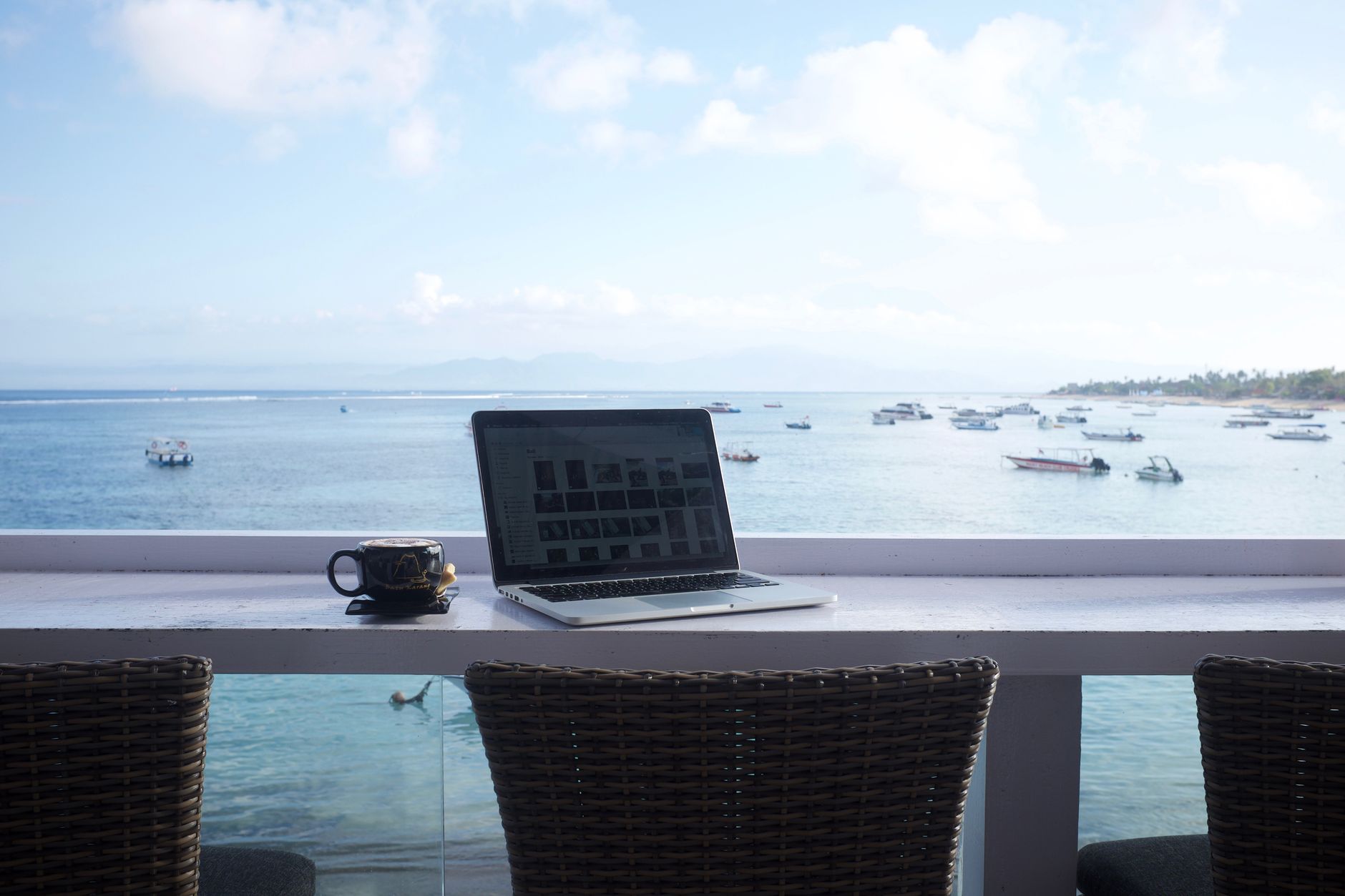
Santa Catalina works particularly well for remote workers with established income, for surf-and-eco entrepreneurship serving the tourism market, for foreign retirees with pension income, and modestly for those running small lifestyle businesses.
For remote workers, internet has improved dramatically. Starlink is widely used and provides reliable connectivity for video calls and standard remote work. Fiber service in parts of the town is functional but with variable reliability. Most established remote workers use combinations — Starlink as primary or backup, fiber where reliable, cellular for travel.
Time zone is UTC-5 year-round (no DST), aligned with US Eastern Standard Time.
Coworking spaces are essentially absent — Santa Catalina's small foreign-resident community has not supported coworking infrastructure. Most remote workers work from home, a few cafes with reliable internet, or from arrangements at surf lodges and hotels.
For foreign retirees, the Pensionado visa applies the same as anywhere in Panama. The lower cost of basic living in Santa Catalina makes Pensionado benefits go further. The lifestyle works for retirees who can accept the healthcare distance and prioritize ocean access over amenities.
Surf-and-eco entrepreneurship is the entrepreneurial path Santa Catalina uniquely supports: dive operations (Coiba access, technical and recreational diving); fishing charter operations (deep-sea, sport fishing); surf schools, surf retreats, and surf-focused lodging; eco-tourism operations; small boutique hotels and B&Bs. The scale is small but real for those with relevant skills and patience.
Vacation rental income exists but is concentrated around peak surf seasons. Properties oriented to surf renters earn premium during specific weeks; average annual occupancy is lower than year-round destinations. Conservative underwriting is essential.
The territorial tax system means foreign-source income is generally not taxed by Panama for residents.
- Remote work viable with Starlink as primary infrastructure; UTC-5 aligned with US Eastern Standard
- Coworking essentially absent; home or cafe work is the pattern
- Surf-and-eco entrepreneurship (dive, fishing, surf lodges) is unique entrepreneurial path
- Pensionado visa applies; lower base costs make benefits go further
- Local employment limited; pay reflects Panamanian rural economy
- Vacation rentals concentrated around surf seasons; conservative underwriting essential
- Territorial tax: foreign-source income generally not taxed by Panama for residents
Safety and Honest Concerns
Santa Catalina is among the safer places in Panama for foreign residents — a small Pacific town with strong community fabric and limited transient population.
Violent crime is uncommon. Santa Catalina is not in any major trafficking corridor; the small-town community presence acts as natural deterrent; the foreign-resident community has not been targeted in any significant way.
Petty crime is the most common issue. Property theft from unsecured or vacant homes, opportunistic break-ins (particularly during lower-season periods when many foreign residents are away), and theft from vehicles all happen. The vacation-and-seasonal-resident dynamic creates specific exposure — properties left empty for weeks or months become targets. Active property management, security systems, and trusted local relationships reduce these risks substantially.
Water safety is significant. The Pacific surf at Santa Catalina is real surf — powerful, with currents and rip tides that produce drowning risk for the unprepared. Even experienced swimmers respect these conditions. The breaks require surf skills appropriate to the conditions.
Wildlife considerations: snakes (including fer-de-lance) exist but are uncommon in residential areas. Marine wildlife generally not dangerous to swimmers and surfers. Stingrays in shallow water can be an issue.
Weather hazards: heavy wet-season rains can produce flooding on lower-lying properties and access roads. Construction quality varies enormously — coastal humidity, salt air, and the rougher infrastructure of a small Pacific town means properties show wear quickly. Independent inspection on any purchase is essential.
Earthquake risk: low to moderate. Outside Atlantic hurricane belt — geographic advantage.
Road safety: rural roads to and from Santa Catalina require careful driving. The healthcare distance is itself a safety consideration — serious medical events require travel time.
- Among the safer Panama destinations
- Petty crime (vacant home theft, vehicle break-ins) most common issue
- Active property management essential for seasonal and vacant homes
- Pacific surf safety significant — powerful waves, currents, rip tides
- Wildlife present but rarely dangerous; fer-de-lance uncommon
- Weather hazards: wet-season flooding, occasional severe surf during storms
- Construction quality varies; independent inspection essential
- Outside hurricane belt; earthquake risk low-moderate
The Hard Truths
This is where the marketing language stops. Santa Catalina has been marketed as the "next Pedasí" or as the "undiscovered Pacific surf paradise" for years, and the gap between marketing language and daily reality is real.
The infrastructure is genuinely off-grid. Power outages happen weekly or more frequently. Water systems require active management. Internet, while improved, still drops at inconvenient moments. People who arrive expecting Coronado-style or Pedasí-style infrastructure are repeatedly surprised by how rough the practical reality is. The first wet season of permanent residence is particularly tested.
Healthcare distance is the single biggest factor that drives people away from Santa Catalina. The romance fades when a medical event requires Santiago or Panama City travel. People who choose Santa Catalina seriously should evaluate carefully how healthcare access fits with their phase of life and any chronic conditions.
The wet season tests residents. The afternoon rains, the road conditions, the green explosion of Veraguas wet season, and the humidity reality all test newcomers. People who arrive in February (the height of dry season trade winds and surf) sometimes discover what June through October actually looks like.
Spanish proficiency requirements are higher than in expat-saturated destinations. The English-speaking foreign-resident community is small enough that English-only daily life is meaningfully limited.
The surf community can become an echo chamber. Long-term surfers have integrated lives. But the rotating international surf and traveler population creates a dynamic where some newcomers spend their first year exclusively with English-speaking surf-community members, never developing the broader Panamanian or non-surf relationships that produce deeper community.
Construction quality varies dramatically. Properties marketed as luxury or high-end can have hidden moisture problems, structural issues, or substandard materials. Property title issues exist on some properties, particularly older rural properties and informal beach-adjacent subdivisions. Independent legal review by a notario not connected to the seller is non-negotiable.
The seasonal-resident dynamic affects community formation. Many foreign residents are part-year, returning to colder climates during their summer months. This creates a dramatic seasonal swing.
First-year adjustment is real. Those who get through 18-24 months tend to stay long-term. Those who don't tend to relocate to other Panamanian destinations or back home.
- Infrastructure is genuinely off-grid; power, water, internet realities tested by wet season
- Healthcare distance is the biggest factor that drives people back to mainland destinations
- Wet season tests residents; dry-season visitors don't see the full picture
- Spanish proficiency requirements higher than expat-saturated destinations
- Surf community can become English-speaking echo chamber
- Construction quality varies; independent inspection essential
- Property title issues exist on some properties; independent legal review non-negotiable
- Seasonal-resident dynamic affects community formation and property management
- Surf community has internal cultural norms (priority, localism) affecting newcomers
- First-year adjustment significant
- Santa Catalina of 1995 is not Santa Catalina of today
- Property appreciation steady but not dramatic; lifestyle focus over investment
Frequently Asked Questions About Living in Santa Catalina
Is Santa Catalina safe for foreigners to live in?
Santa Catalina is among the safer places in Panama for foreign residents. Petty property crime (theft from vacant or unsecured properties) is the most common issue, particularly during the lower seasons when many foreign residents are away. Violent crime is uncommon. Active property management addresses most realistic risks.
How much does it cost to live in Santa Catalina?
Modest lifestyle with apartment, local groceries, and basic accommodation runs $1,200-2,000 monthly. Comfortable lifestyle with a real house, regular dining, vehicle, and backup systems running runs $2,200-3,500+. Santa Catalina is the least expensive coastal Panama destination among major options.
Do I need to speak Spanish to live in Santa Catalina?
Yes. The English-speaking foreign-resident community is small enough that English-only daily life is meaningfully limited. Real friendships with Panamanians, integration into the broader community, banking, medical care, and government processes all require Spanish proficiency. The surf community has its own multi-language patterns but broader integration needs Spanish.
What is the best time of year to visit Santa Catalina?
Dry season (December through April) brings sustained Pacific trade winds, sunshine, and the best surf conditions for many breaks. Whale-watching season (July through October) is exceptional. Visiting during both dry and wet seasons before committing is wise — the two experiences are very different.
Quick Reference: Santa Catalina At a Glance
- Province
- Veraguas
- Region
- Pacific Coast / Veraguas Coast
- Time Zone
- UTC-5 (EST, no DST)
- Airports
- PTY (Tocumen, international, 4 hrs); Santiago small aircraft (occasional)
- Foreign Ownership
- Full fee-simple title
- Peak Season
- December – April (dry season / best surf); July-October (whale watching)
Getting There
International arrivals through Tocumen International (PTY) in Panama City, then a 4-hour drive west via Pan-American Highway to Santiago, then south 1.5 hours to Santa Catalina. Alternative: small aircraft service to Santiago airport (occasional and limited). Most arrivals drive. Uber from PTY is not practical for this distance — rental car or arranged transport.
Real Estate Overview
Santa Catalina offers Panama's most distinctive Pacific surf coast real estate market — small-town authenticity combined with world-class surf access and proximity to Coiba National Park. Range spans modest in-town homes ($60K-150K), mid-range single-family homes ($150K-350K), higher-end ocean-view properties ($350K-700K+), and significant land or estate properties. Foreign buyers hold full fee-simple title. The market is small, less liquid, and less developed for foreign buyers than Boquete or coastal Panama elsewhere — which is part of both the appeal and the limitation.
What Works
- World-class Pacific surf — point break consistently rated among Americas' best
- Coiba National Park UNESCO marine reserve offshore — exceptional biodiversity
- Humpback whale watching excellent July-October
- Least expensive coastal Panama destination among major options
- Pensionado visa applies; benefits go further proportionally
- Outside Atlantic hurricane belt — geographic advantage
- Foreign-resident community small but established (200-400)
What to Consider
- Healthcare significantly limited — no hospital, 1.5 hours to Santiago, 4 hours to Panama City
- Infrastructure genuinely off-grid; power, water, internet outages common
- Spanish proficiency essentially required for integration
- 4-hour drive to Panama City and Tocumen International — meaningful for travel
- Property title due diligence essential — Veraguas land complexity exists
- Construction quality varies; salt-air and humidity hard on properties
- Educational infrastructure beyond primary level essentially absent
Practical Notes
Choosing Santa Catalina means choosing the off-grid Pacific Panama that exists outside the expat enclaves — world-class surf, exceptional marine biodiversity, authentic small-town life, and infrastructure realities that test commitment. The trade-off is healthcare distance (no hospital, 4 hours to Panama City), spread infrastructure (Santiago 1.5 hours for full grocery shopping), and the genuinely rough realities of life in a small Pacific Panama town. People who thrive in Santa Catalina are self-directed, healthy, surf-and-ocean-focused, willing to develop Spanish proficiency, and committed to the lifestyle for its own sake. The Pensionado visa applies for qualifying foreign retirees. Independent property due diligence is essential — Veraguas title complexity exists. Spending time in Santa Catalina during both dry season (best face) and wet season (full reality) before committing is wise. Backup systems for power and water are standard infrastructure, not optional. The vacation-home and seasonal-resident dynamic means active property management is part of the cost structure. Give yourself two full years before judging whether Santa Catalina is the right place.
Explore Santa Catalina Listings
Santa Catalina Surf-Adjacent Homes | Santa Catalina Investment Land | All Santa Catalina Property
Nearby Areas
Related Santa Catalina Resources
Santa Catalina Market Hub — Browse Listings | Santiago Market Hub | Santa Catalina Panama for Surfers and Pacific Coast Buyers | Where Expats Buy Property in Panama | Best Places to Retire in Panama | Panama Beach Property for Vacation Rental Investors | Panama Real Estate Guide for American Buyers | Pedasí Living Guide — Adjacent Pacific Destination | Playa Venao Living Guide — Sister Pacific Surf Community | Panama City Living Guide — The Capital